2023. 11. 7. 21:57ㆍ디자인패턴
proxy pattern
: 어떤 객체에 대한 접근을 제어하기 위한 용도로
대리인에 해당하는 객체를 제공하는 패턴.
proxy 종류
- remote proxy: 원격 객체에 대한 접근 제어
- virtual proxy: 생성하는 비용이 많이 드는 자원에 대한 접근 제어
- protection proxy: 접근 권한에 필요한 자원에 대한 접근 제어
remote proxy

다른 네트워크상에 있는 객체에 접근하려고 하는 경우
proxy를 통해 접근할 수 있다.
proxy가 진짜 객체를 대신하는 역할을 한다.
Java RMI
Remote Method Invocation: 원격 메서드 호출

client는 stub에게 요청 -> stub는 skeleton에게 요청 -> skeleton은 service에게 요청
Making the Remote service
1. Remote Interface 만들기
: 어떤 서비스 메서드를 원격으로 제공할 것인지 인터페이스 정의
import java.rmi.*;

public interface MyRemote extends Remote{
	public String sayHello() throws RemoteException; //원격접속 실패 시 예외처리
}
원격으로 하기 위해 자바의 Remote 인터페이스 상속
-> Remote 인터페이스 안에는 아무 메서드도 없음
단지 원격으로 한다고 표시하는 역할(marker interface)
2. Remote Inteface 메서드 구현
import java.rmi.*;
import java.rmi.server.*;

public class MyRemoteImpl extends UnicastRemoteObject implements MyRemote {
    public String sayHello() {
    	return “Server says, ‘Hey’”;
    }
    public MyRemoteImpl() throws RemoteException { } //생성자

    public static void main (String[] args) {
        try {
            MyRemote service = new MyRemoteImpl();
            Naming.rebind(“RemoteHello”, service); //stub을 registry에 등록
        } catch(Exception ex) {
            ex.printStackTrace();
        }
    }
}
3. stubs와 skeletons 만들기
: dos에서 rmic 명령어를 사용하면 자동으로 만들어진다.
-> rmic MyRemoteImpl
4. RMI registry 프로그램 시작
-> rmiregistry
5. remote 서비스 시작하기
-> java MyRemoteImpl
Client

1. RMI registry에서 stub을 찾아 다운로드
-> Naming.lookup("rmi://127.0.0.1/RemoteHello");
2. RMI registry에서 stub 객체를 client 네트워크 환경으로 반환한다.
3. 이제 stub 객체를 Service 객체인 것처럼 사용한다.
import java.rmi.*;

public class MyRemoteClient {
    public static void main (String[] args) {
    new MyRemoteClient().go();
    }
    public void go() {
        try {
        MyRemote service = (MyRemote) Naming.lookup(“rmi://127.0.0.1/RemoteHello”);
        String s = service.sayHello();
        System.out.println(s);
        } catch(Exception ex) {
            ex.printStackTrace();
    }
}
GumballMachine 원격 서비스로 사용하기
1.

2.
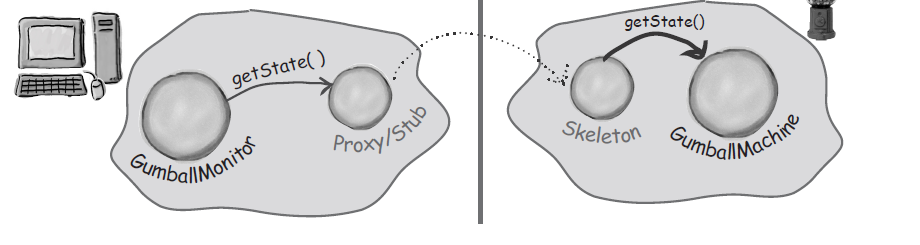
3.

import java.rmi.*;
    public interface GumballMachineRemote extends Remote {
    public int getCount() throws RemoteException;
    public String getLocation() throws RemoteException;
    public State getState() throws RemoteException;
}
import java.io.*;
public interface State extends Serializable {//객체를 넘기기 위해 Serializable(직렬화) 상속
public void insertQuarter();
public void ejectQuarter();
public void turnCrank();
public void dispense();
}import java.rmi.*;
import java.rmi.server.*;
public class GumballMachine
extends UnicastRemoteObject implements GumballMachineRemote
{
// instance variables here
public GumballMachine(String location, int numberGumballs) throws RemoteException {
// code here
}
public int getCount() {
return count;
}
public State getState() {
return state;
}
public String getLocation() {
return location;
}
// other methods here
}/*서비스 객체*/
public class GumballMachineTestDrive {
public static void main(String[] args) {
GumballMachineRemote gumballMachine = null;
int count;
if (args.length < 2) {
System.out.println(“GumballMachine <name> <inventory>”);
System.exit(1);
}
try {
count = Integer.parseInt(args[1]);
gumballMachine =
new GumballMachine(args[0], count);
Naming.rebind(“//” + args[0] + “/gumballmachine”, gumballMachine);
} catch (Exception e) {
e.printStackTrace();
}
}
}/*클라이언트 객체*/
import java.rmi.*;
public class GumballMonitorTestDrive {
public static void main(String[] args) {
String[] location = {“rmi://santafe.mightygumball.com/gumballmachine”,
“rmi://boulder.mightygumball.com/gumballmachine”,
“rmi://seattle.mightygumball.com/gumballmachine”};
GumballMonitor[] monitor = new GumballMonitor[location.length];
for (int i=0;i < location.length; i++) {
try {
GumballMachineRemote machine =
(GumballMachineRemote) Naming.lookup(location[i]);
monitor[i] = new GumballMonitor(machine);
System.out.println(monitor[i]);
} catch (Exception e) {
e.printStackTrace();
}
}
for(int i=0; i < monitor.length; i++) {
monitor[i].report();
}
}
}'디자인패턴' 카테고리의 다른 글
| Bridge Design Pattern (2) | 2023.12.05 |
|---|---|
| Compound Patterns (2) | 2023.11.14 |
| State pattern (0) | 2023.10.31 |
| composite pattern (0) | 2023.10.30 |
| The iterator pattern (0) | 2023.10.22 |